How High-Purity NPMI Enhances Heat Resistance and Performance
Introduction: Why N-Phenylmaleimide Matters in PVC Modification
With the increasing demand for high-temperature-resistant PVC materials in construction, electrical, automotive, and industrial applications, traditional PVC formulations often face limitations in heat distortion temperature (HDT) and long-term thermal stability.N-phenylmaleimide (NPMI) has emerged as an effective functional monomer and modifier to significantly improve the thermal performance of PVC resin.As a professional manufacturer of N-phenylmaleimide, Yangchen Tech supplies high-purity NPMI specifically engineered for PVC heat-resistant modification, helping downstream processors achieve stable, high-performance PVC products.
What Is N-Phenylmaleimide?
N-phenylmaleimide is a high-performance maleimide monomer characterized by:
Rigid imide ring structure
High thermal stability
Excellent compatibility with polar polymers such as PVC
Specification
Appearance
Melting point
Purity
Solubility
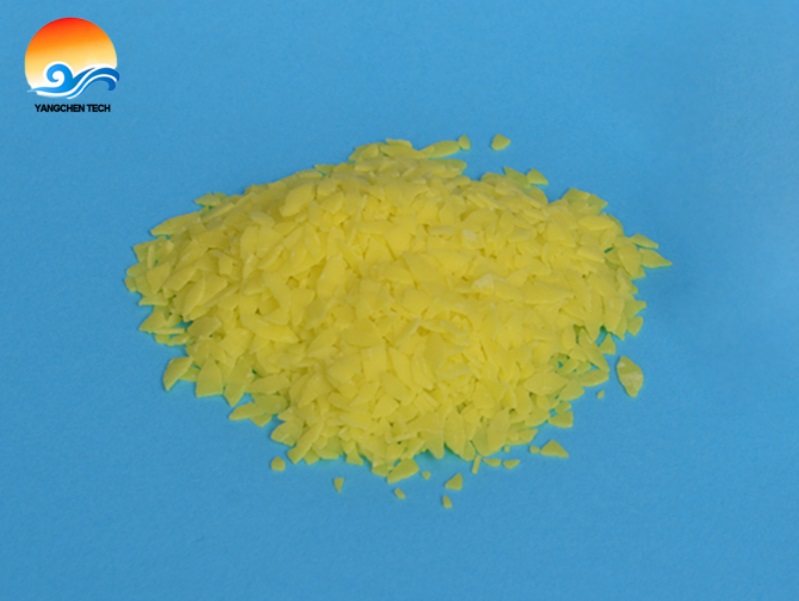
Yellow crystalline powder or flakes
85-90℃
>99%
Soluble in organic solvents
Chemical Structure
Chemical Formula
C10H7NO2
Molecular Weight
173.16
CAS No.
941-69-5
Packing Type
Paper bag (20 kg)
In PVC systems, NPMI is typically introduced through copolymerization or blending, acting as a heat-resistant modifier rather than a simple additive.
Application of N-Phenylmaleimide in PVC Resin
1. Improving Heat Resistance of PVC
One of the most important applications of N-phenylmaleimide in PVC resin is the increase of heat resistance.
Thanks to its rigid aromatic imide structure, NPMI:
Raises the Vicat softening temperature
Improves heat distortion temperature (HDT)
Enhances thermal stability during long-term heat exposure
This makes NPMI-modified PVC suitable for:
Electrical conduits and cable insulation
Hot-water pipes and fittings
High-temperature PVC profiles and sheets
2. Enhancing Mechanical Properties
In addition to heat resistance, N-phenylmaleimide contributes to:
Improved hardness and rigidity
Better dimensional stability
Reduced deformation under thermal stress
This balanced improvement allows PVC products to maintain mechanical strength while operating at elevated temperatures.
3. Improving Processing Stability
High-quality NPMI also helps optimize PVC processing by:
Reducing thermal degradation during extrusion or injection molding
Improving melt stability under higher processing temperatures
Enabling broader processing windows for complex PVC formulations
For PVC compounders, this translates into higher production efficiency and more consistent product quality.
Typical Dosage and Use in PVC Systems:
N-phenylmaleimide is used at low addition levels, yet delivers significant thermal improvement
It can be incorporated into PVC modifiers or copolymer systems for enhanced efficiency
Exact dosage depends on the target heat resistance, processing conditions, and final application requirements.
The application of N-phenylmaleimide in PVC resin represents an effective and economical solution for improving heat resistance, mechanical stability, and processing performance.
With high purity, excellent compatibility, and reliable supply, Yangchen Tech’s N-phenylmaleimide is an ideal choice for PVC compounders and manufacturers seeking high-performance PVC materials.
Contact Yangchen Tech today to request technical data, free samples, or customized solutions for N-phenylmaleimide used in PVC resin.